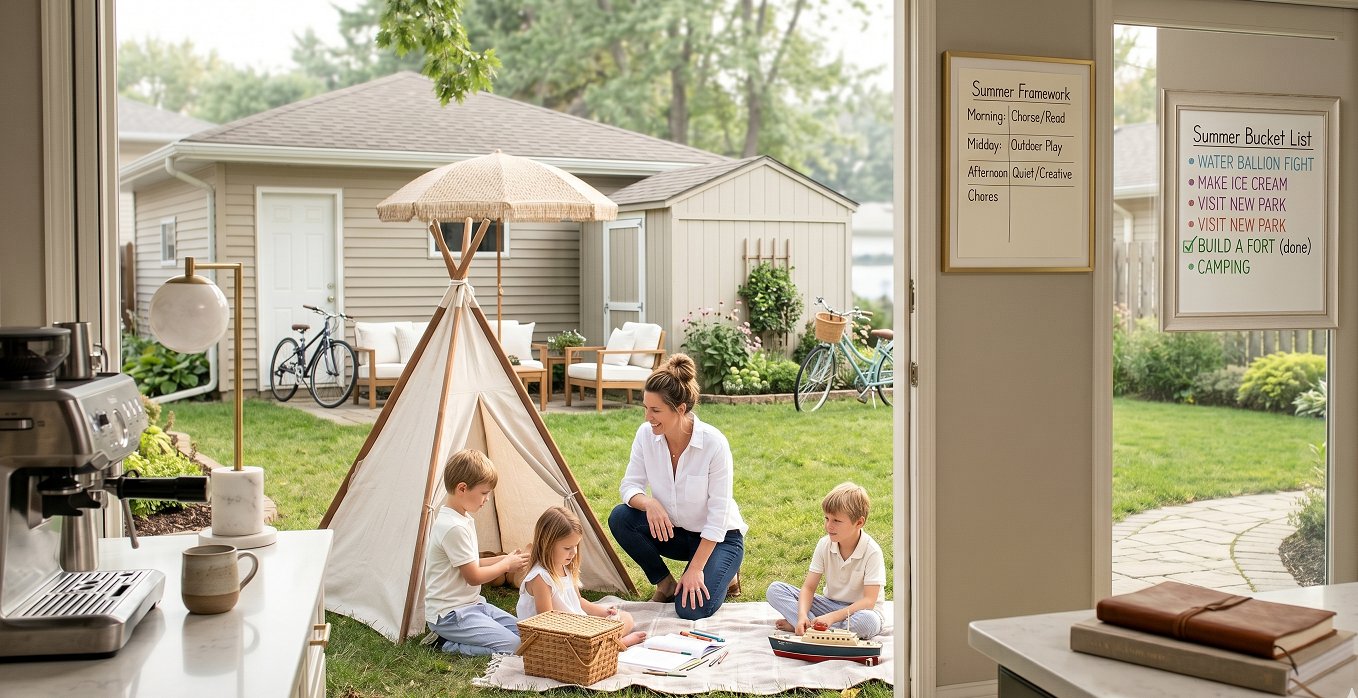

Summer arrives with sunshine, freedom, and endless possibilities. For children, it's often the most exciting season of the year. For parents? It can feel like a three-month juggling act filled with snacks, boredom complaints, messy houses, and constant demands for entertainment.
If you've ever heard "Mom, I'm bored!" before you've even finished your morning coffee, you're not alone.
The good news is that summer doesn't have to be a season of stress. With a little structure, realistic expectations, and intentional planning, you can create a summer that is enjoyable for both you and your children.
"Children don't need a perfect summer. They need connection, consistency, and a parent who is present."
Remember: You Are Not Their Entertainment Director
One of the biggest mistakes parents make is feeling responsible for entertaining their children every minute of every day.
Children benefit from boredom. Boredom encourages creativity, problem-solving, imagination, and independence. When your child says they're bored, resist the urge to immediately solve the problem.
Instead, try responding with: "That sounds like a great opportunity to find something creative to do."
Giving children space to figure things out on their own builds resilience and confidence.
Create a Flexible Daily Routine
Summer doesn't need the rigid structure of the school year, but children still thrive with predictability. Consider creating a simple framework for each day:
Morning
- Get dressed & eat breakfast
- Complete chores
- Read for 20–30 minutes
Midday
- Outdoor activity
- Pool, park, walk, or bike ride
Afternoon
- Creative time
- Crafts, puzzles, music, or games
Evening
- Family dinner
- Family walk
- Board games or movie night
A routine helps reduce power struggles because everyone knows what comes next.
Practical Tips for a Smoother Summer
Give Them Responsibilities
Summer is the perfect time to teach life skills. Children often rise to expectations when given meaningful tasks — making beds, helping prepare meals, watering plants, or helping younger siblings. Responsibility builds confidence and reduces the burden on parents.
Limit Screen Time Without Making It a Battle
Instead of focusing on what they're not allowed to do, create a balance. Try reading before screens, outdoor play before electronics, and educational activities before gaming. Setting clear expectations ahead of time prevents daily negotiations.
Create a Summer Bucket List Together
Sit down and brainstorm activities everyone wants to do. Keep the list visible and let children help choose throughout the summer.
- Visit a new park
- Have a water balloon fight
- Make homemade ice cream
- Go camping
- Watch a sunset
- Have a picnic
- Visit a museum
- Build a fort
- Volunteer as a family
Schedule Quiet Time Daily
Parents need breaks too. Even older children benefit from a daily quiet period — reading, journaling, coloring, or independent play. A dedicated hour of quiet time each day helps everyone recharge.
Let Go of Perfection
Social media often paints summer as a series of magical adventures and picture-perfect family moments. The reality is different.
Some days will be messy. Some days your children will argue. Some days you'll count down the hours until bedtime. That doesn't mean you're doing anything wrong.
"The greatest gift you can give your children this summer isn't constant entertainment. It's your presence."
Years from now, your children probably won't remember every activity, camp, or outing. They will remember how safe they felt, how much they laughed, conversations in the car, ice cream after dinner, and lazy afternoons together.
Take a breath, embrace the imperfect moments, and remember that sometimes the best summer memories come from the simplest days.